
BPS Pay Scale in Pakistan Explained — What BPS-1 to BPS-22 Actually Means
If you've seen a government job advertisement listing "BPS-17" or "BPS-14" and wondered what that actually means for your paycheck, you're not alone. The Basic Pay Scale (BPS) system is how Pakistan's federal and provincial governments structure pay across every civil service post from support staff to the most senior officers. Here's how it works.
What Is the BPS System?
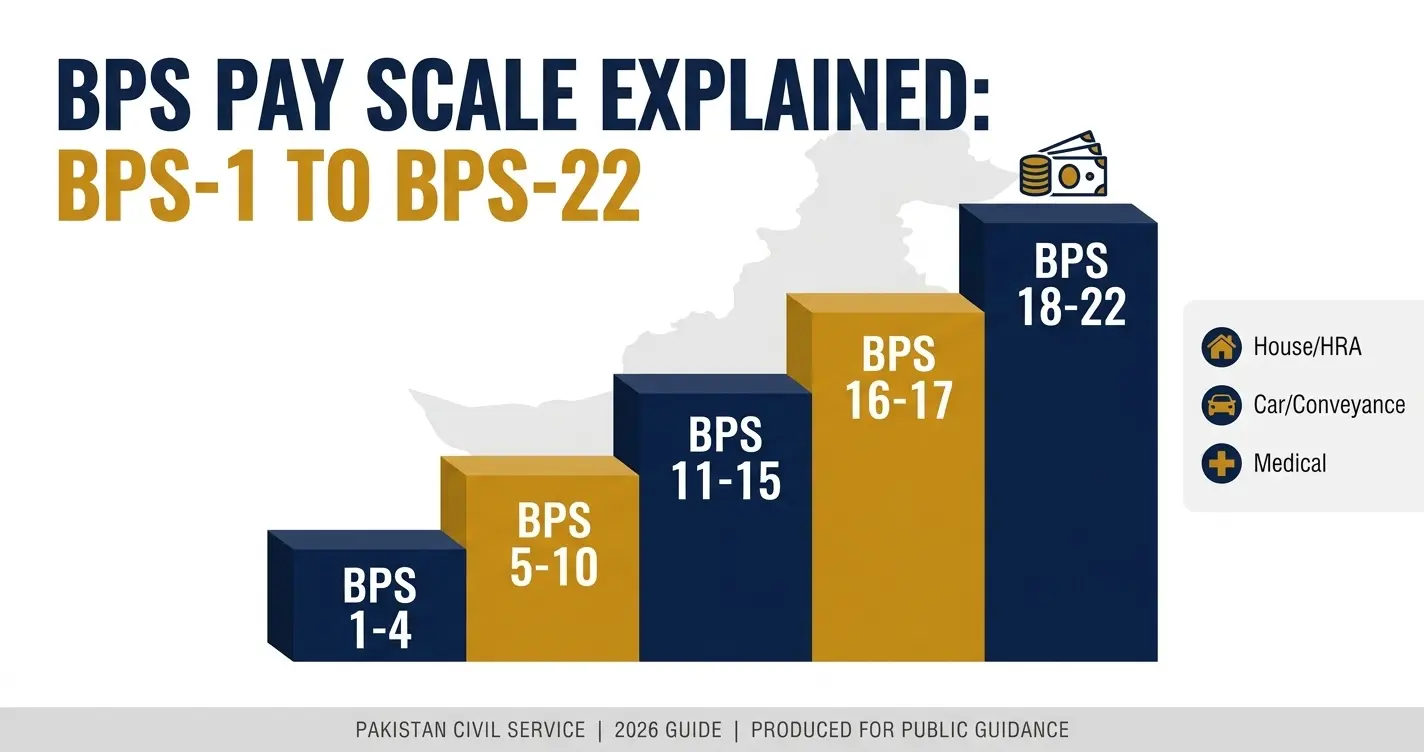
BPS stands for Basic Pay Scale — a 22-tier structure (BPS-1 through BPS-22) that every regular government post in Pakistan is assigned to. The scale number determines your basic pay bracket, your seniority level, and often your eligibility for certain allowances and promotions. Higher scale = higher basic pay and more senior responsibilities.
BPS Scale Overview (Relative Pay Bands)
Exact basic pay figures are revised in the federal budget (usually announced in June each year), so rather than listing numbers that go stale, here's how the scales compare to each other and what kind of posts typically sit at each level:
For exact current basic pay figures, always check the official Finance Division pay scale notification (finance.gov.pk) this guide explains the structure, not a fixed number that will stay accurate year to year.
Allowances: Why Your Actual Pay Isn't Just the "Basic Pay" Number
Basic pay is only part of a government employee's total salary. On top of it, most posts include:
- House Rent Allowance (HRA) — typically calculated as a percentage of basic pay, varies by city classification
- Conveyance Allowance — a flat or scale-linked amount toward transport costs
- Medical Allowance — fixed or scale-linked, covers routine medical expenses
- Ad-hoc Relief Allowances (ARAs) — periodically announced increases layered on top of basic pay, separate from a full pay scale revision this is usually why your payslip total doesn't match the "basic pay" figure you see quoted online
What Actually Determines Take-Home Pay
Take-home pay = Basic Pay + Allowances − Deductions (pension/provident fund contribution, income tax where applicable). This is why two people at the same BPS scale in different departments or cities can see different net pay allowances and local cost-of-living adjustments vary.
Why This Matters When You're Applying
When you see a BPS grade on a job post, you now know roughly where it sits — whether it's an entry clerical post or a senior officer position — and that the number alone doesn't tell the whole pay story. Check the specific advertisement for any stated allowances, and treat the official Finance Division notification as the source of truth for exact current figures.